


Japanese Green Tea: Types and How to Brew Each One
Japanese green tea types explained: sencha, gyokuro, bancha, kukicha, hojicha, genmaicha and matcha, how each tastes, and the water…
Country, language & currency
or
The Tea Journal · Brewing Guides · Green Tea
By the Tealyra Tea Team · · 4 min read

In short: yellow tea (huang cha) is a rare Chinese tea made almost like green tea, with one extra step called "sealed yellowing", when the warm, damp leaves rest wrapped in cloth or paper. This mellows the grassy taste and gives a smooth, sweet, slightly buttery cup with a golden liquor. Brew 3 g per 8 oz (240 ml) at 175-185°F (80-85°C) for 2-3 minutes.
Yellow tea is the smallest of China's six tea types, and many tea lovers have never tasted it. It deserves more attention: it has the freshness of a green tea without the sharp edges, which makes it one of the easiest "special" teas to enjoy.
All true teas come from the same plant, Camellia sinensis. What separates white, green, yellow, oolong, black and dark tea is how the fresh leaves are processed. Yellow tea sits between green and white tea: the leaves are heated to stop oxidation, like green tea, but then rest in a warm, humid pile. During this rest, gentle chemical changes in the leaf soften its color and taste.
Production is small and slow, and only a handful of regions in China still make it in the traditional way. That is why yellow tea is often called China's rarest tea type, and why it was long reserved for gifts and the imperial court.
The yellowing step is not the same as oxidation in oolong or black tea. It is a slower, warmer, more humid change that removes grassiness and brings out sweetness.
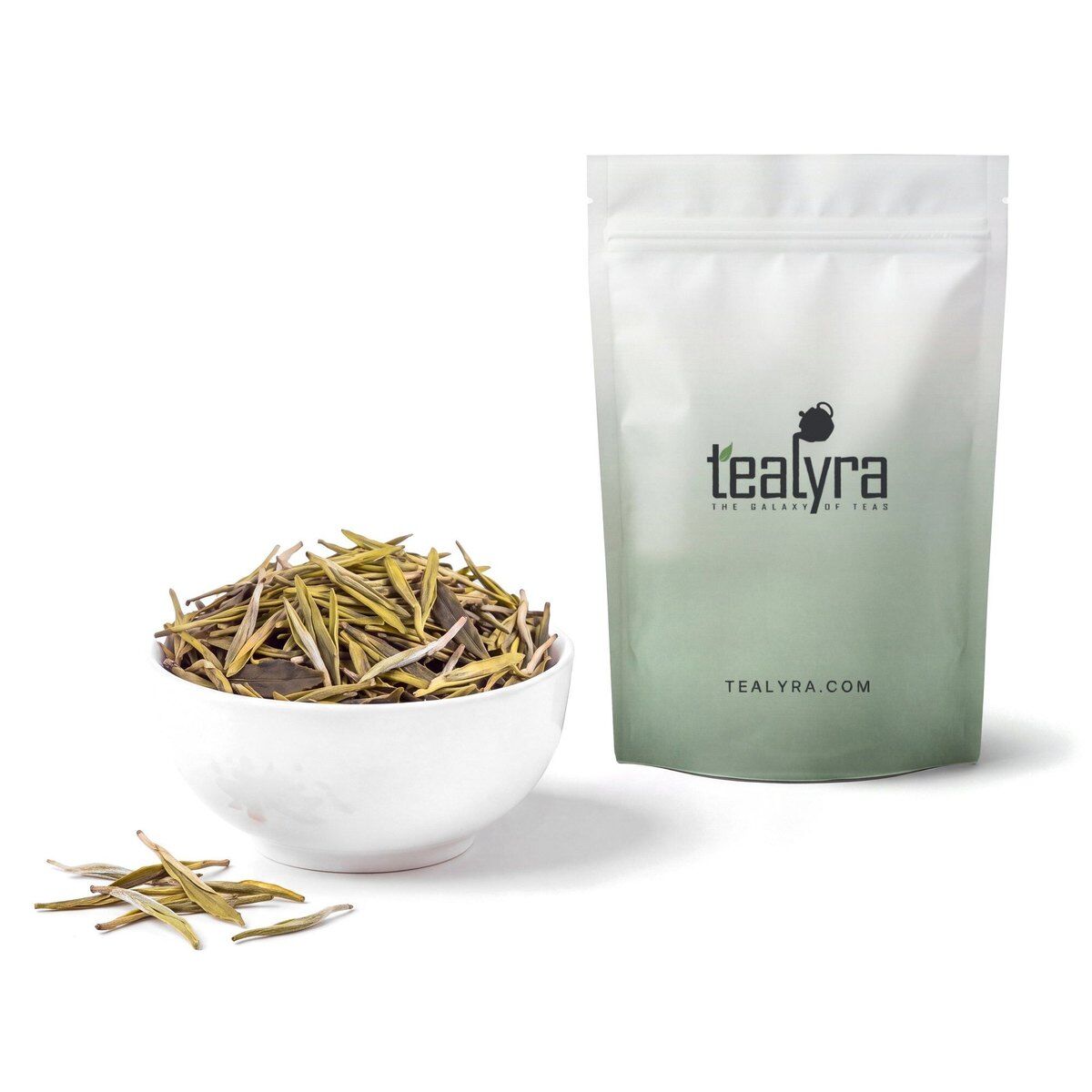
| Yellow tea | Green tea | |
|---|---|---|
| Extra step | Sealed yellowing after heating | None, dried straight after shaping |
| Dry leaf | Yellow-green, often with downy buds | Bright to deep green |
| Liquor | Golden yellow | Pale green to yellow-green |
| Taste | Smooth, sweet, mellow, buttery | Fresh, grassy, vegetal or nutty |
| Bitterness | Very low | Low to medium, depends on brewing |
| Availability | Rare, small production | Widely available |
If green tea sometimes tastes too sharp or grassy to you, yellow tea is well worth a try.
To try the style, start with Huo Shan Huang Ya Yellow for its rich sweetness, or Huang Cha Yellow Tea, which is floral, smooth and a little like a light oolong. Golden Dragon Yellow Tea is another good choice for a mellow everyday cup. See the full range in our yellow tea collection.
Expect a soft, round cup with very little astringency. Common notes are sweet corn, honey, toasted rice, dried apricot and light florals. The liquor is clear and golden, and the finish is sweet and lingering. Bud-only teas are more delicate; bud-and-leaf teas are fuller and sweeter.
Treat it gently, like a fine green tea, but with slightly warmer water so the sweetness opens up.
| Method | Leaf | Water | Time | Infusions |
|---|---|---|---|---|
| Mug or teapot | 3 g per 8 oz (240 ml) | 175-185°F (80-85°C) | 2-3 min | 2-3 |
| Glass (to watch the buds) | 2-3 g per 8 oz (240 ml) | 175°F (80°C) | 3 min, top up as you drink | 2-3 |
| Gaiwan | 4-5 g per 3.5 oz (100 ml) | 185°F (85°C) | 30-45 sec, then +10-15 sec | 4-6 |
Tips: avoid boiling water, which flattens the sweetness; use filtered water; and taste the cup before adding more time. Yellow tea is best enjoyed plain, without milk or sugar. For more tips on water temperature for delicate teas, see our guide to Chinese green tea.
Yellow tea contains caffeine, usually in a similar range to green tea; bud-heavy teas can have a little more. Store it like green tea: in an airtight, opaque container, away from heat, light and strong smells, and enjoy it within a year for the freshest taste.
Because of the sealed yellowing step, which turns the leaves and the liquor a soft golden yellow. In Chinese it is called huang cha, which means "yellow tea".
No. It starts out like green tea but has its own extra processing step, so it is counted as a separate tea type, one of China's six.
The yellowing step is slow and hard to control, and only a few regions still make it traditionally. Many producers switched to green tea, which is quicker to make and easier to sell.
Yes. Like all teas from the Camellia sinensis plant, it contains caffeine, typically in a similar range to green tea.
It is best plain. Its flavor is subtle and sweet, and milk would cover it. A small pastry or fresh fruit makes a nicer pairing.
Japanese green tea types explained: sencha, gyokuro, bancha, kukicha, hojicha, genmaicha and matcha, how each tastes, and the water…

Jasmine dragon pearls grades compared: leaf pluck, scenting rounds, pearl size and silver tips, and how our four grades differ in the cup…

Sencha explained: how Japan's everyday green tea is made, what it tastes like, the grades and steaming styles to know, and how to brew it…